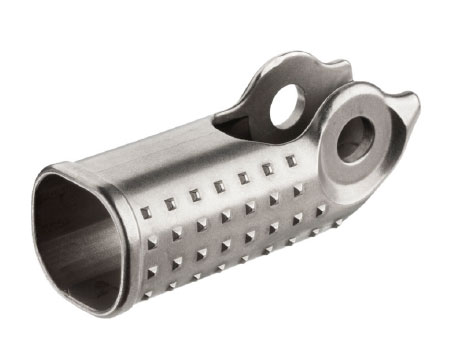
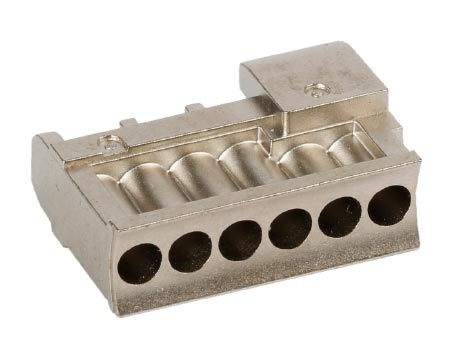
We master the complete process chain. Everything from a single source. Everything from OESTERLE®. Zylindrischer Auftritt für Schalthebel (Fußschalthebel) aus 17‑4 PH‑Edelstahl, MIM‑gefertigt, 52 × 20 × 19 mm, Gewicht 27,8 g; perforierte und geriffelte Oberfläche für rutschfesten Gangwechsel Auftritt Bremshebel MIM Kühler MIM Gewicht Sinter Grün-weißes Zertifikat der DEKRA für Qualitäts- und Umweltmanagement

Injection Molding for Hard Materials – MIM Technology

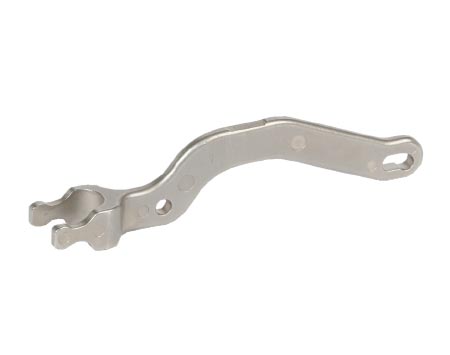
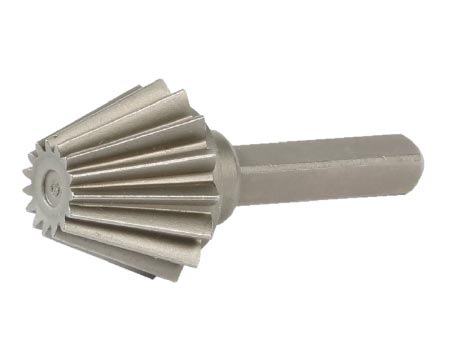
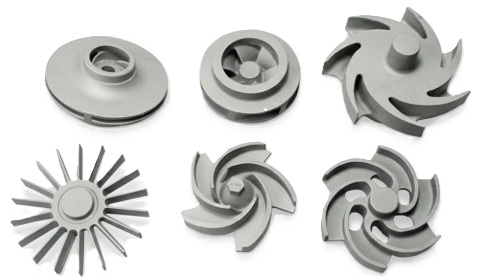
The MIM process, also known as metal injection molding, is a primary molding process for producing metal components with complex geometries and is based on the principle of injection molding technology, which is the undisputed leader in the series production of plastic components. MIM (Metal Injection Molding) combines the advantages of injection molding with the properties of metal materials.

Manufacturing process

1 The raw materials of the metallic alloy are processed into a fine powder. BASF is the world's largest manufacturer. Metal powder 2 The metallic powder is mixed with the binder to form the feedstock. Mixing 3 The feedstock is dosed into an injection molding machine and plasticized using heating bands. Dosing and plasticizing 4 The molding compound is injected into the closed mold. Spraying 5 The workpiece cools in the mold and gains its dimensional stability. The pressure is maintained to compensate for the material shrinkage. Cooling 6 After cooling, the mold is opened and the green part is ejected. Ejection 7 The binder which is required for shaping is being removed. This creates the porous brown part, which has very low strength. Debinding 8 Only with the sintering step does the component receive its final properties. The powder particles combine near the melting point. Sintering 9 For example, drilling, milling, tumbling, polishing, coating, etc. Finishing 10 The component is checked for compliance with the drawing specifications and material properties. Quality control Abbildung des Fertigungsverfahrens Sintern in 10 Schritten, jeweils textlich erläutert & mit blauen Zahlen nummeriert

1 The raw materials of the metallic alloy are processed into a fine powder. BASF is the world's largest manufacturer. Metal powder 2 The metallic powder is mixed with the binder to form the feedstock. Mixing 3 The feedstock is dosed into an injection molding machine and plasticized using heating bands. Dosing and plasticizing 4 The molding compound is injected into the closed mold. Spraying 5 The workpiece cools in the mold and gains its dimensional stability. The pressure is maintained to compensate for the material shrinkage. Cooling 6 After cooling, the mold is opened and the green part is ejected. Ejection 7 The binder which is required for shaping is being removed. This creates the porous brown part, which has very low strength. Debinding 8 Only with the sintering step does the component receive its final properties. The powder particles combine near the melting point. Sintering 9 For example, drilling, milling, tumbling, polishing, coating, etc. Finishing 10 The component is checked for compliance with the drawing specifications and material properties. Quality control 1 The starting materials of the metallic alloy are processed into a powder. The world's largest manufacturing company is BASF. Metal powder 2 The metallic powder is mixed with the binder to form the feedstock. Mixing 3 The feedstock is dosed in an injection molding machine and plasticized by heating bands. Dosing and plasticizing 4 The molding compound is injected into the closed mold by axial displacement of the screw. Spraying 5 The workpiece cools in the mold and gains its dimensional stability in the process. Pressure is maintained to compensate for shrinkage of the material. Cooling 6 After cooling, the mold is opened and the green part is ejected. Ejection 7 The binder necessary for shaping is dissolved out again. The result is the porous brown part, which has very low strength. Debinding 8 Only with the sintering step does the component increase its final properties. The powder particles grow together near the melting point. Sintering 9 For example, drilling, milling, barrel finishing, polishing, coating, etc. Finishing 10 The component is checked for compliance with the drawing specifications and material properties. Quality control Abbildung des Fertigungsverfahrens Sintern in 10 Schritten, jeweils textlich erläutert & mit blauen Zahlen nummeriert

Advantages of the MIM Process
The production of components using MIM technology has various advantages.

  • The process enables the economical production of highly complex components in large-scale production.
  • It also enables cost-effective production of components in large quantities.
  • The MIM process allows the use of high-strength metallic materials and stainless steels with high sintering density, resulting in low material waste and high material reusability.
  • Costly assembly processes can be eliminated, and threads can be incorporated into the original mold, depending on requirements and size.
  • Thanks to MIM technology, even the smallest geometries, fonts, reliefs, and structures can be reproduced with great detail.
E-mail

Request email

Phone

Call